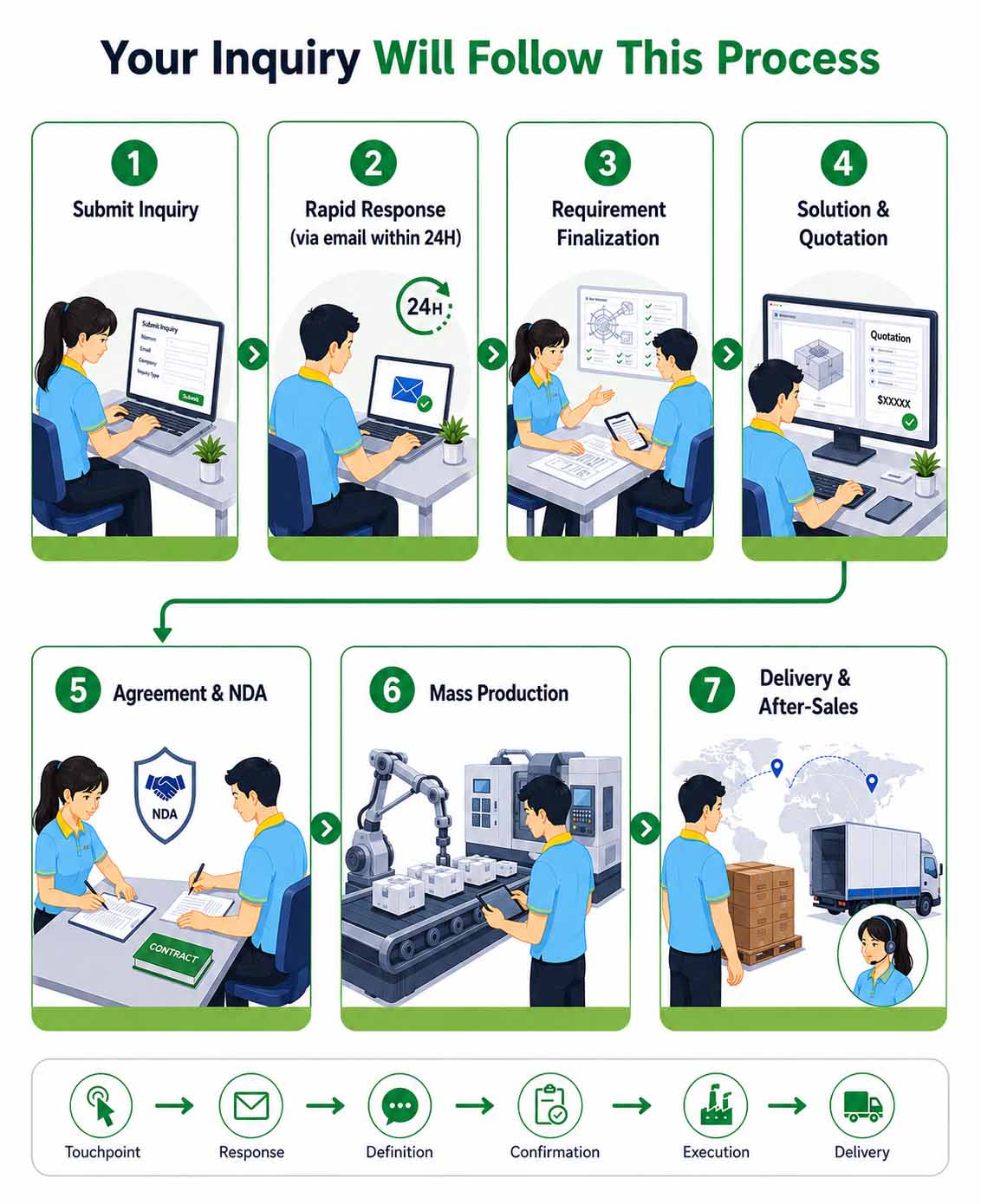


A rigid box may look simple when it is sitting on a shelf, but producing one at commercial scale is a much more involved process. For cosmetics, jewelry, perfume and other premium products, the box has to do several jobs at once: protect the product, fit the brand identity, create a good opening experience and remain consistent across thousands of units.
So, what actually happens after a buyer sends a packaging idea to a rigid box manufacturer? The process usually moves through several stages, from structural design and material selection to sampling, tooling, production, finishing and quality inspection. Understanding these steps makes it easier for brands and wholesale buyers to prepare specifications, control costs and avoid expensive changes after mass production begins.
1. Start With the Product and Packaging Requirements
Every successful rigid box project starts with the product rather than the box itself. A cosmetic bottle, perfume bottle, necklace or ring may have very different packaging requirements, even when the outer box looks similar.
Before a manufacturer begins structural development, buyers should provide the product dimensions, weight, quantity per box, opening direction, preferred materials, branding requirements and expected order volume. It is also useful to explain how the packaging will be used. Will it be displayed in a retail store? Shipped through e-commerce channels? Used for a limited-edition gift set? These details can influence the structure and insert design.
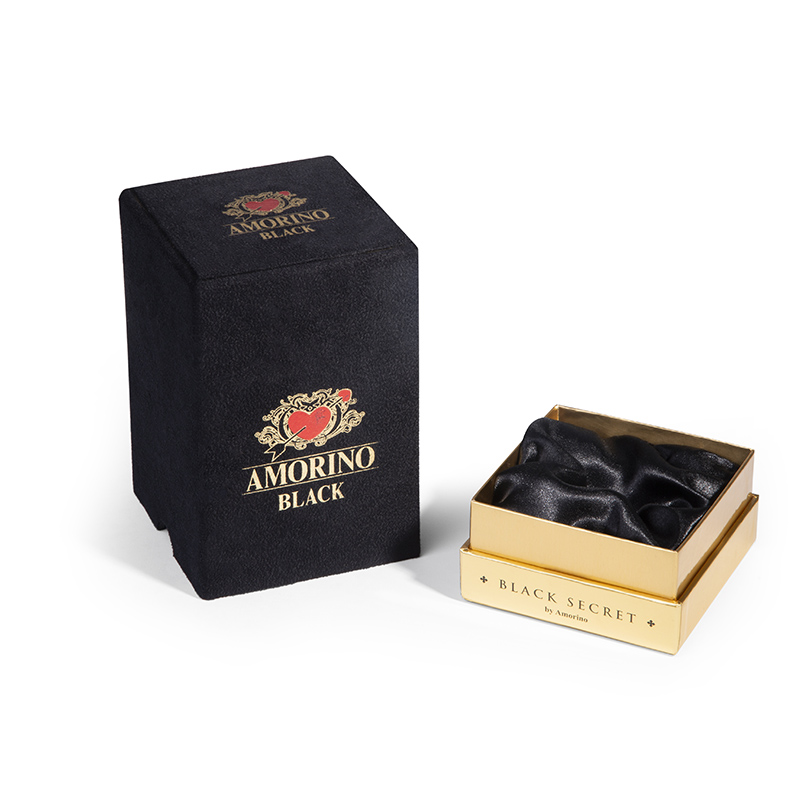
For example, MingFeng's luxury perfume box combines a rigid paper structure with a black faux-suede exterior, EVA and satin interior, gold accents and hidden magnets. The product page also lists customized sizing, color, material and logo options, showing how a packaging concept can be developed around a specific product and brand.
2. Develop the Structural Design
Once the requirements are clear, the next step is structural design. This is where the manufacturer determines how the box will open, close, hold the product and maintain its shape.
Common rigid packaging structures include two-piece boxes, magnetic closure boxes, drawer boxes, book-style boxes, hinged boxes and more specialized multi-compartment designs. The right choice depends on the product and the experience the brand wants to create.
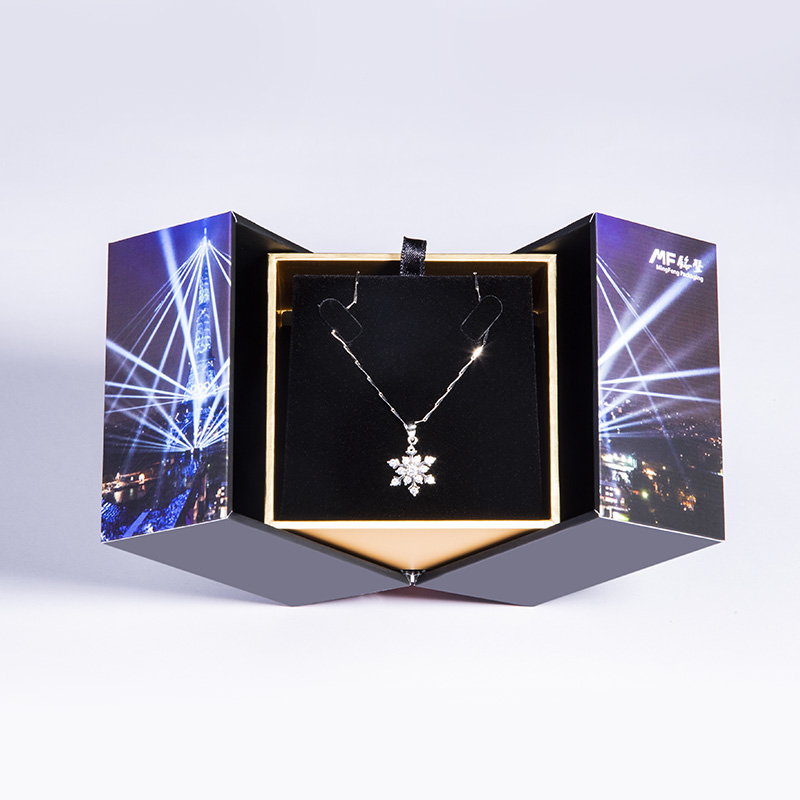
Jewelry packaging often requires even more attention to internal organization. Rings, earrings, bracelets and necklaces may each need different holders or compartments. MingFeng's custom jewelry box uses a two-door opening structure with a lifting mechanism that raises the interior display area when the doors are opened.
During structural development, the manufacturer also considers board thickness, grooves, lid clearance, magnet placement, hinge position and assembly tolerances. A good structural design should look attractive, but it also needs to work reliably during repeated opening, closing, packing and transportation.
3. Select the Right Materials
Material selection has a direct effect on the rigidity, appearance, weight and cost of the finished box. A rigid box commonly uses paperboard or greyboard as the structural core, while the exterior can be wrapped with specialty paper, coated paper, fabric, faux suede or other materials depending on the design.
For premium cosmetic and jewelry packaging, buyers often need to balance three things: how the box feels in the hand, how well it protects the product and how efficiently it can be produced at the required quantity.
A heavier board may create a substantial premium feel, but it also increases material consumption and shipping weight. A lighter construction may reduce cost, but it needs to provide enough rigidity for the product and intended use.
Interior materials should also be selected according to the product. EVA, satin, velvet, paperboard trays and other inserts can be used to create different levels of protection and presentation. The insert should not be treated as an afterthought because it determines how the product sits inside the box.
4. Create the Packaging Prototype
A prototype gives the buyer and manufacturer an opportunity to check the design before committing to mass production. This stage can reveal problems that are difficult to identify from a drawing alone.
Does the bottle fit tightly enough? Is the lid easy to open? Does the necklace stay in position? Is the insert aligned correctly? Does the box feel stable when carried? These practical questions are much easier to answer with a physical sample.
For a B2B buyer, the sample approval stage is also the right time to confirm details such as logo position, color, paper texture, foil appearance, embossing depth, insert color and closure strength.
MingFeng's packaging workflow includes packaging prototyping and pre-production sample making, allowing structural, material and process details to be reviewed before mass manufacturing.
5. Test the Structure and Product Fit
A premium rigid box should not only look good in photographs. It needs to perform properly in actual handling conditions.
For cosmetics, the insert should keep bottles, jars or palettes from moving excessively. For jewelry, individual pieces need to remain organized without unnecessary pressure or scratching. For perfume, the bottle should stay securely positioned while the box is opened, closed and transported.
This is particularly important for international wholesale orders. Packaging may pass through warehouses, containers, trucks, distribution centers and retail environments before reaching the final customer. Structural weakness that is not visible during a showroom inspection can become a real problem during transportation.
Product fit should therefore be checked in more than one position. Buyers can ask the manufacturer to evaluate the packaging with the product inserted, removed and handled repeatedly before approving the final structure.
6. Finalize Printing and Surface Finishing
Once the structure and materials have been approved, the manufacturer can finalize the exterior appearance. This is where packaging starts to communicate the brand more directly.
Depending on the project, rigid boxes can use offset printing, UV printing, hot stamping, embossing, debossing, spot UV, matte or gloss lamination, textured papers and other decorative processes.
For luxury cosmetics and jewelry, subtle finishing can sometimes work better than adding too many decorative elements. A simple logo with precise foil, a textured paper surface or restrained embossing can create a stronger brand impression than a box covered with multiple treatments.
The important point is consistency. Colors and finishing effects need to match the approved sample as closely as possible throughout the production run. MingFeng also describes a color-management process covering pre-treatment, output control, process specifications, color detection and quality control.
7. Move From Sample to Mass Production
After the sample is approved, the project moves into mass production. At this point, the manufacturer's production team converts the approved design into a repeatable manufacturing process.
For large wholesale orders, consistency becomes particularly important. Every box needs to maintain the agreed dimensions, color, wrapping quality, logo position, insert fit and closure performance.
This is one reason buyers should choose a manufacturer with experience in both product development and volume production. A supplier that can support structural design, sampling and customized production can reduce the number of handoffs between different companies.
MingFeng presents its service model as a one-stop packaging solution covering project assessment, creative design, customized production and logistics. Its website also states that its structural design team works across packaging forms, box structures, materials and process management.
For buyers looking for customized production , it is useful to confirm production capacity, MOQ, sampling arrangements, quality inspection procedures and lead time before placing the bulk order.
8. Quality Control During Production
Quality control should not be left until the final cartons are ready for shipment. Different checkpoints can be used throughout the manufacturing process.
- Check raw materials and board quality before production.
- Confirm printing colors and artwork against the approved sample.
- Inspect cutting, grooving and assembly accuracy.
- Check wrapping for wrinkles, bubbles, exposed edges or uneven corners.
- Verify magnets, hinges, ribbons and other hardware when applicable.
- Check insert dimensions and product fit.
- Inspect finished boxes before packing and shipment.
The inspection standard should be agreed before production begins. For an international buyer, photographs, approved samples and production inspection records can also make communication easier between the purchasing team and the packaging manufacturer.
9. Prepare the Finished Boxes for Export
Manufacturing is not quite finished when the boxes come off the production line. Export packaging is another important part of the process, particularly for rigid boxes because their finished structure can occupy significant shipping volume.
The manufacturer needs to consider how the boxes will be stacked, protected and loaded. Inner protection should help prevent scratches, dents and surface damage during handling. Carton dimensions and packing quantities should also be planned carefully to make better use of container or pallet space.
For overseas buyers, it is worth discussing shipping requirements before production starts rather than after the boxes have already been packed. MingFeng lists logistics and transportation packaging as part of its one-stop packaging service, including transportation planning and protective packaging for different markets and shipping methods.
10. What Should B2B Buyers Confirm Before Mass Production?
If you are sourcing custom rigid cosmetic or jewelry packaging, a clear production brief can save considerable time. Before approving a bulk order, confirm the following:
| Item | What to Confirm |
|---|---|
| Box structure | Opening method, dimensions, lid fit and overall construction |
| Materials | Board, wrapping material, insert and interior lining |
| Branding | Logo size, position, colors and artwork files |
| Finishing | Foil stamping, embossing, lamination, UV or other treatments |
| Product fit | Insert dimensions, compartments and clearance around the product |
| Order | MOQ, quantity, sampling cost and production lead time |
| Quality | Inspection criteria and acceptable tolerances |
| Shipping | Packing method, carton quantity and export requirements |
Why the Manufacturing Process Matters for Custom Rigid Boxes
A successful rigid packaging project is the result of many small decisions rather than one impressive design feature. The structure needs to fit the product. The materials need to support the intended use. The insert needs to hold the product securely. Finishing needs to match the brand identity. And the manufacturing process needs to reproduce the approved design consistently at commercial volume.
This matters even more for custom jewelry packaging and premium cosmetic packaging, where the box is often part of the product presentation rather than simply an outer container.
For brands purchasing hundreds or thousands of boxes, working with the manufacturer from the design stage can also make communication more efficient. Instead of treating design, sampling, production and quality control as separate tasks, the entire process can be managed as one packaging project.
Frequently Asked Questions About Custom Rigid Box Manufacturing
How long does custom rigid box manufacturing take?
The timeline depends on the box structure, materials, printing, finishing, insert design, sampling requirements and order quantity. Buyers should confirm the sample and bulk-production schedule with the manufacturer before placing an order.
Can rigid boxes be customized for different product sizes?
Yes. Custom rigid packaging can be developed around the dimensions, weight and shape of the product. The internal insert can also be tailored to hold individual products or multiple items in a set.
What information should I provide for a custom rigid box quote?
Provide product dimensions, box dimensions if known, quantity, preferred materials, artwork, logo requirements, box structure, insert requirements, finishing preferences and destination market. Photos or physical product samples can also help the manufacturer evaluate the project.
Are rigid boxes suitable for cosmetic and jewelry packaging?
Yes. Their strong structure and customizable interiors make them suitable for perfume, skincare, cosmetics, jewelry, watches and other premium products. The final construction should be selected according to the product's protection and presentation requirements.
Can a manufacturer help with the packaging design?
A full-service packaging manufacturer can often support structural development, artwork coordination, sampling and production. MingFeng's website describes its services as covering packaging assessment, creative design, structural design, prototyping and customized production.
Planning a Custom Rigid Box Project?
If you are developing rigid cosmetic packaging, jewelry boxes, perfume packaging or another premium packaging project, the best time to discuss structure, materials and production requirements is before the artwork is finalized.
MingFeng provides customized packaging solutions across cosmetics, jewelry and other premium product categories, with support covering design, prototyping, production and logistics.
Request a Packaging Quote to discuss your product dimensions, box structure, materials, quantity and customization requirements.

 +1 626 369 5099


 IPv6 network supported