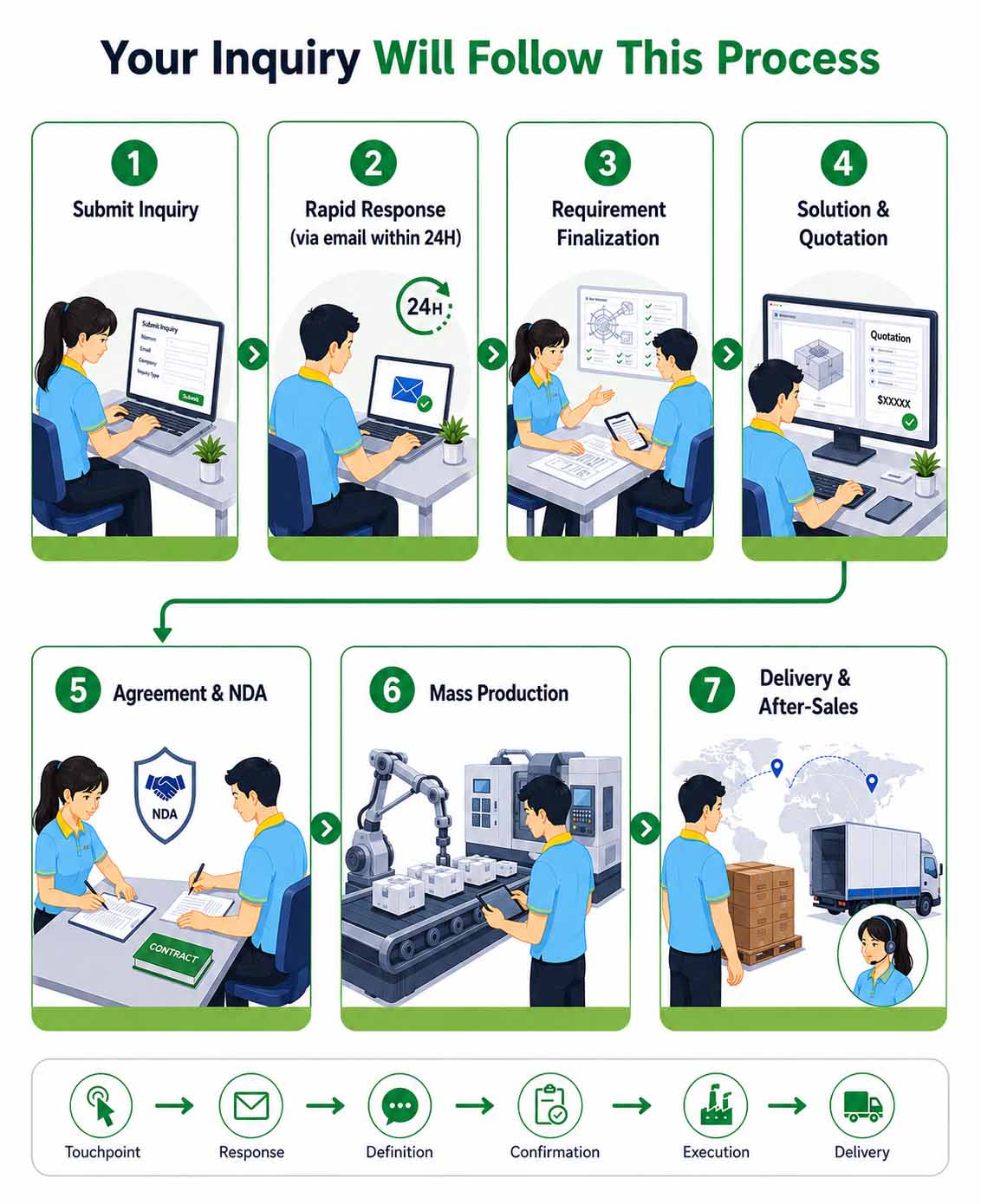
leave a message
If you are interested in our products and want to know more details,please leave a message here,we will reply you as soon as we can.
Luxury cosmetic packaging needs to do more than protect skincare products, perfume, and beauty gift sets. It must communicate quality through its color, texture, surface finish, and overall presentation. At the same time, cosmetic brands are under growing pressure to reduce the environmental impact of their packaging, including the coatings and finishing materials used during production.
Water-based coatings and UV finishing technologies offer different ways to approach this challenge. When the right coating formulation is selected and properly controlled, brands can reduce certain emissions while maintaining the refined appearance expected from premium packaging. For manufacturers such as Mingfeng Packaging, the key is to balance visual quality, material compatibility, production requirements, and verifiable environmental performance.
This article explains how water-based coatings contribute to lower-VOC cosmetic packaging, how they differ from UV coatings, and what luxury beauty brands should consider when developing a more sustainable packaging solution.
Water-based coatings use water as the primary carrier instead of relying entirely on conventional organic solvents. They are commonly considered for packaging applications where manufacturers want to reduce solvent-related emissions while achieving a consistent decorative or protective finish.
UV coatings, by comparison, are designed to cure when exposed to ultraviolet light. UV curing can produce a dry, durable surface quickly, making it useful for selected printing and finishing processes. However, conventional UV coatings and water-based UV-curable systems are not necessarily the same product. Some systems combine water-based chemistry with UV curing, while others use separate technologies.
This distinction matters when selecting a finish for luxury cosmetic packaging. A water-based coating may help reduce VOC emissions, but it is not automatically VOC-free. Likewise, a UV-curable coating does not automatically qualify as zero-VOC. The actual result depends on the formulation, application method, curing process, and applicable testing standards.
For packaging buyers, the practical question is not simply whether a coating is labeled water-based or UV. It is whether the complete finishing system meets the brand's environmental requirements while delivering the desired appearance and durability.
Volatile organic compounds, or VOCs, are a broad group of carbon-containing chemicals that can evaporate into the air under normal conditions. Depending on the substances involved, their sources, and exposure levels, VOC emissions can contribute to indoor and outdoor air-quality concerns.
In packaging production, VOCs may originate from coatings, inks, adhesives, cleaning products, and other process materials. Choosing a lower-VOC coating can therefore be one part of a broader emissions-reduction strategy.
For luxury cosmetic brands, this decision also has commercial implications. Consumers increasingly pay attention to sustainability claims, while retailers and business customers may request documentation about packaging materials and manufacturing practices.
Working with an experienced cosmetic packaging supplier allows brands to consider surface treatments alongside packaging structure, materials, printing, and presentation rather than treating sustainability as a separate design decision.
Water-based coatings can help reduce VOC emissions when they replace higher-solvent alternatives with a suitable lower-VOC formulation. Their effectiveness, however, depends on the complete coating system and how it is used in production.
Reduced reliance on organic solvents: In appropriately formulated products, water serves as the main carrier, potentially reducing the amount of organic solvent required. This can help lower emissions during coating application and drying.
Compatibility with different surface finishes: Water-based coatings can be developed for different levels of gloss, matte appearance, color presentation, and surface protection. The exact finish depends on the formulation and the substrate, so testing is necessary before selecting a coating for a specific packaging design.
Potential improvements in workplace conditions: Lower-solvent formulations may reduce certain solvent emissions during production. Nevertheless, ventilation, safe handling, equipment maintenance, and the control of other process chemicals remain important.
Support for broader sustainability goals: Coating selection can contribute to a more responsible packaging process, but it is only one factor. Substrate sourcing, packaging weight, recyclability, production waste, and transport also affect the overall environmental profile.
These benefits should be evaluated against actual product data rather than assumed from the term water-based alone. Brands seeking zero-VOC performance should request formulation-specific documentation and relevant test results from their coating or packaging suppliers.
A low-emission coating must still meet the visual and functional expectations of luxury cosmetic packaging. A beautiful box that scratches easily, loses color, or develops an uneven surface may fail to deliver the quality that a premium brand needs.
Coating selection should therefore consider several performance factors:
Gloss and matte consistency: The finish should remain uniform across the packaging surface, with the selected gloss level matching the brand's visual identity.
Color accuracy: Pale neutrals, deep black, metallic-inspired colors, and soft pastel shades may respond differently to coating formulations. Sampling helps identify changes in color, clarity, and surface appearance.
Scratch and abrasion resistance: Cosmetic boxes may be handled repeatedly during filling, shipping, retail display, and consumer use. Surface durability should be tested under conditions relevant to the intended application.
Adhesion and drying performance: A coating must work with the selected substrate, ink, and any additional finishing processes. Drying or curing conditions should also fit the production workflow.
Compatibility with decorative techniques: Embossing, debossing, foil stamping, screen printing, and other finishing methods may require different process sequences or surface properties. Trial production can help prevent defects and rework.
For premium brands, the objective is to achieve the intended finish with a coating system that meets both technical specifications and environmental requirements. No single coating type is the best choice for every packaging structure.
Mingfeng Packaging develops customized packaging for premium products, including cosmetic and skincare gift boxes. Its packaging range illustrates how material selection, surface treatment, structural design, and presentation can work together to create a distinctive brand experience.
For example, the company's Aqua Gradient Pearl Gloss Lacquer Wooden Box uses a water-based painting technique to achieve a decorative gradient finish. The product demonstrates how a water-based surface treatment can support an expressive, premium appearance while aligning with a more environmentally conscious design approach.
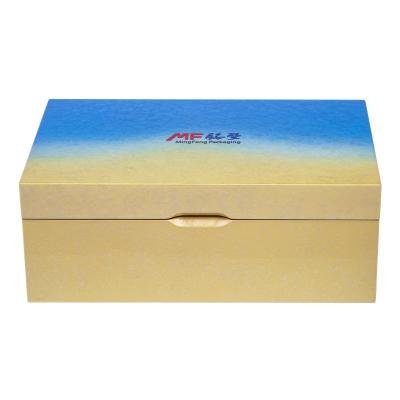
Aqua Gradient Pearl Gloss Lacquer Wooden Box featuring a water-based decorative finish.
Although this example is a wooden packaging product rather than a cosmetic box, it provides a relevant reference for evaluating decorative finishes. For skincare and beauty brands, the appropriate approach is to assess whether a similar coating concept can meet the requirements of the intended substrate, design, and production process.
Brands exploring different structures can also review Mingfeng's luxury cosmetics packaging boxes to consider how the outer finish, internal compartments, and overall presentation can be tailored to a premium product line.
Paper-based packaging and wooden boxes have different surface characteristics, so a coating that works well on one material may not perform the same way on another.
Paper and paperboard boxes: These structures are commonly used for skincare sets, perfume gift boxes, and product presentation packaging. Coating selection should account for paper absorbency, printed graphics, color consistency, folding requirements, and compatibility with other decorative processes.
Wooden cosmetic packaging: Wood and engineered wood products may require additional surface preparation to achieve a uniform appearance. Grain, substrate porosity, edge details, and the desired gloss level can affect the coating process and final result.
Composite and specialty materials: Laminated surfaces and specialty papers may have different adhesion requirements. A coating should be tested on the actual material combination rather than selected from a generic specification.
Mingfeng's custom packaging solutions cover multiple material categories and finishing techniques. This makes material and process coordination an important consideration when developing packaging for a particular product or market.
Before mass production, brands should approve a physical sample and verify that the selected coating maintains the required appearance, adhesion, and resistance under realistic handling and transport conditions.
The answer depends on the coating formulation, the definition of zero VOC being used, and the scope of the assessment.
A coating described as water-based may still contain some organic solvents, coalescing agents, or other ingredients that contribute to VOC content or emissions. UV-curable systems may also contain reactive components that require separate assessment. In addition, the coating is only one part of a finished package: inks, adhesives, substrates, and other treatments may affect the overall result.
For this reason, a zero-VOC claim should not be based solely on a supplier's description of a product as water-based, environmentally friendly, or UV-cured.
Before making an environmental claim, brands should:
Review the technical data: Request the coating's VOC content, relevant safety documentation, and applicable test reports.
Clarify the measurement method: Confirm whether the claim refers to VOC content in the coating, emissions during a defined process, or the finished packaging under a specific testing protocol.
Check the full packaging system: Assess inks, adhesives, coatings, and other relevant materials rather than relying on one component's specification.
Confirm regulatory requirements: Different countries, regions, and certification schemes may define or assess VOC-related claims differently. The intended market and applicable requirements should be identified before the claim is published.
Where zero-VOC performance cannot be substantiated, a more precise description such as lower-VOC coating or water-based surface treatment may be more appropriate, provided that the wording is supported by evidence.
Coating technology can support emissions reduction, but genuinely sustainable luxury packaging requires a wider view of the product lifecycle.
Material efficiency is one consideration. A packaging structure that uses fewer unnecessary components may reduce material consumption without compromising protection or presentation. Right-sized packaging can also help avoid excessive bulk during storage and shipping.
Material selection is another important factor. Paperboard, responsibly sourced wood, and other suitable materials should be evaluated according to their origin, durability, end-of-life options, and the requirements of the target market. A material should not automatically be described as recyclable or sustainable without considering its complete construction, including coatings, laminations, inserts, and adhesives.
Manufacturing efficiency also matters. A coating process that delivers consistent results can help reduce rejected products, excess material use, and avoidable rework. Sampling and process validation before mass production are practical ways to identify issues early.
For brands developing a new beauty collection, these decisions are best considered together during packaging design. Mingfeng's paper skincare box with drawers is an example of a packaging structure designed around product organization and presentation, showing how the internal layout can be part of the overall design strategy.
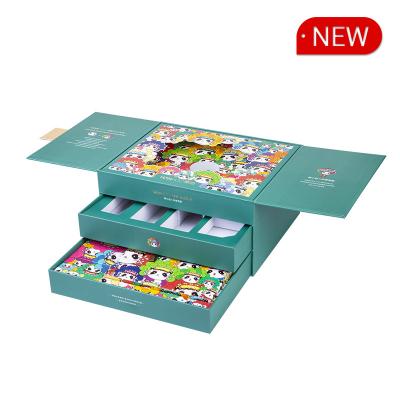
Custom skincare packaging with organized compartments and a distinctive unboxing design.
Combining thoughtful structure, appropriate materials, and a well-tested surface finish gives brands a more practical foundation for improving packaging sustainability without sacrificing the luxury experience.
When evaluating water-based coatings for a luxury cosmetic packaging project, buyers can make the selection process more efficient by discussing the following questions with their supplier:
Which substrate will be used? Confirm the exact paperboard, wood, or specialty surface and whether the proposed coating has been tested on it.
What finish is required? Specify gloss or matte appearance, color, texture, and any additional decorative effects.
What environmental evidence is available? Request formulation-specific VOC information and relevant test documentation instead of relying only on general sustainability statements.
How will the coating perform in use? Discuss scratch resistance, adhesion, drying or curing, folding, storage, and transport conditions.
Can a production-representative sample be approved? A sample made with the intended materials and process is more informative than a digital mockup alone.
Which other components affect the claim? Check the inks, adhesives, laminations, inserts, and other treatments included in the finished packaging.
Clear answers to these questions help brands compare suppliers on measurable performance, not just appearance or marketing terminology. They also reduce the risk of discovering coating incompatibility or unsupported environmental claims after production has started.
Are water-based coatings automatically zero-VOC?
No. Water-based coatings can reduce reliance on organic solvents, but some formulations still contain VOCs or other volatile ingredients. A zero-VOC claim requires suitable product documentation and a clearly defined testing basis.
What is the difference between water-based coatings and UV coatings?
Water-based describes the coating's primary carrier, while UV-curable describes a curing method that uses ultraviolet light. These terms refer to different properties, although some coating systems may combine both technologies.
Can water-based coatings be used on luxury cosmetic boxes?
Yes, selected water-based coatings can be used on suitable paper-based or wooden packaging. Compatibility depends on the substrate, formulation, surface preparation, desired finish, and production process. Testing is recommended before mass production.
Do low-VOC coatings affect the appearance of luxury packaging?
They can be formulated to deliver a range of finishes, including matte and gloss effects. However, color accuracy, surface smoothness, adhesion, and durability should be confirmed through sampling and testing.
How can a cosmetic brand verify a zero-VOC packaging claim?
Ask for technical documentation and relevant test reports, clarify the definition and scope of the claim, and assess the complete packaging system. The evidence should support the precise wording used in marketing materials.
What should brands prioritize when developing sustainable cosmetic packaging?
Consider coating chemistry, substrate sourcing, packaging structure, material efficiency, recyclability where applicable, manufacturing waste, and transport. Sustainability is a combination of decisions rather than the result of one coating alone.
Water-based coatings can play a useful role in the development of lower-VOC luxury cosmetic packaging, particularly when the coating is selected to suit the substrate and supported by appropriate technical evidence. UV finishing may also be suitable for specific applications, but it should be assessed as a distinct technology rather than treated as an automatic guarantee of zero-VOC performance.
For beauty brands, the best results come from balancing surface appearance, material compatibility, durability, manufacturing efficiency, and environmental requirements from the beginning of the design process.
Mingfeng Packaging offers customized packaging solutions for premium products, including cosmetic and skincare packaging. To discuss material options, surface finishes, structural design, or a project-specific sample, visit the Mingfeng Packaging website and contact the team about your packaging requirements.

Mingfeng Packaging(USA)
> 4185 Temple City Blvd,
Unit D,EI Monte,CA91731,USA


 +1 626 369 5099
 IPv6 network supported