

Your luxury product must arrive protected, look worthy of its price, and still fit a defined budget. That tension drives every specification decision you make.
Three pillars guide the choice: materials, structures, and finishing options. Start with your product's fragility, weight, dimensions, and brand positioning. A two-door opening paper jewelry box suits delicate pieces, while a luxury paper perfume gift box demands a different structure.
Custom Paper Packaging succeeds when these inputs align. An experienced partner such as MingFeng Packaging can streamline evaluation and sampling. A custom specialty paper box then reflects both product and brand.
Key Takeaways
- Choose the right board weight for your product's size and price point to ensure protection and a premium feel.
- Select a structure that fits your product's dimensions and shipping needs, such as magnetic boxes for fragile items or folding cartons for budget-friendly options.
- Use one or two high-impact finishes like foil stamping or spot UV to create a luxurious look without overspending.
- Set a realistic budget by pricing materials, structure, and finishes separately, and consider volume discounts.
- Always request samples before production to check fit, colors, and finishes, and avoid costly mistakes.
Materials for Custom Paper Packaging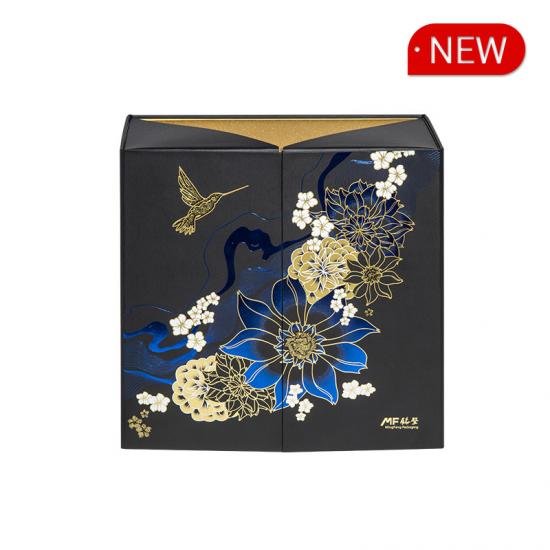
Material selection sets the foundation for everything that follows. Your brand position, product demands, and intended unboxing feel all point toward a specific board and wrap combination. Get this layer right, and the structure and finishes build on solid ground.
Rigid Boxes and Chipboard Specs
A rigid box uses a chipboard core wrapped in paper, and that core holds its shape permanently. Board runs from 800 gsm to 2000 gsm, roughly 1 mm to 3 mm caliper, according to Eliterigidboxes. The same source offers a simple rule: 2 mm feels adequate, 2.5 mm feels premium, and 3 mm feels substantial. Above roughly $80 retail, the heavier spec usually earns its cost.
|
Board GSM |
Caliper |
In-Hand Feel |
Typical Use |
|---|---|---|---|
|
800–1000 gsm |
1.0–1.2 mm |
Light but firm |
Ring, earring and lipstick boxes |
|
1000–1400 gsm |
1.2–1.8 mm |
Solid, holds shape confidently |
Watch, perfume and candle boxes |
|
1400–1800 gsm |
1.8–2.4 mm |
Noticeably substantial on lift |
Shirt, shoe and gift set boxes |
|
1800–2000 gsm |
2.4–3.0 mm |
Heavy — reads as luxury immediately |
Handbag, electronics and hamper boxes |
Thicker greyboard enhances rigidity and premium feel, Gentlever notes, but it also raises material consumption and setup requirements. Match the board to the product. A ring box at 2" × 2" × 1.5" works well at 800–1000 gsm, while a handbag box at 16" × 12" × 8" justifies 1800–2000 gsm. For a luxury paper perfume gift box, Eliterigidboxes recommends 1200–1400 gsm in a shoulder-neck style.
The core is chipboard or paperboard, which comes in a variety of thicknesses and provides the sturdiness and form of the box.
Folding Cartons and Wrap Papers
Folding cartons offer a cost-efficient route to affordable luxury. Solid bleached sulfate board typically runs 10 to 24 pt (0.25 to 0.61 mm), and Packwire uses 16 to 18 pt SBS on its folding cartons. Xactz places the luxury range at 250–400 gsm, with 300–350 gsm coated SBS as the volume standard for cosmetics and fragrance cartons. The key threshold sits near 400 gsm: above it, you cross into rigid territory at 800 gsm and up.
Wrap papers shape the first tactile impression. Kraft suits natural, authentic positioning. Coated stocks resist scuffs and support sharp printing. Textured papers signal craftsmanship and heritage. Fabric wraps add a woven, tactile richness. Soft-touch surfaces create a modern, minimal feel. Gentlever notes that frequently handled boxes benefit from coated paper, while foil stamping and embossing demand paper that holds pressure without cracking. Pair heavy textures with rigid boards and lightweight papers with folding cartons. This is where Custom Paper Packaging decisions become tangible.
Structures That Fit Product and Budget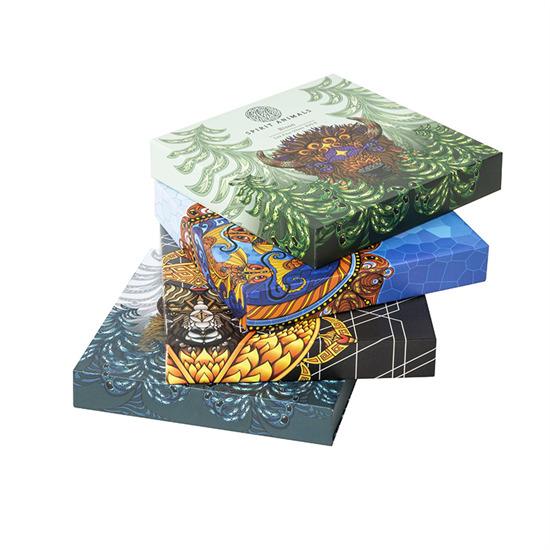
Structure selection follows directly from product dimensions, weight, protection needs, opening experience, and shipping method. A heavier item may require thicker rigid board and reinforced construction. A fragile item often benefits from foam, EVA, paperboard, or molded inserts, according to Fastkitpack. Multi-item kits need a clean internal layout that keeps components stable. Display-oriented products may call for a wider opening angle or an elevated insert platform. Shipping method matters as well. Some magnetic boxes ship fully rigid and assembled, while collapsible or fold-flat versions reduce storage and freight, Fastkitpack notes. Structure affects freight costs, warehouse footprint, assembly time, and damage rates in transit. A well-designed interior protects the contents while making the reveal feel intentional and polished, Fastkitpack adds.
Magnetic Closure and Drawer-Style Boxes
A magnetic rigid box typically consists of a base box, a lid, an embedded magnetic closure system, and internal components such as a tray or cushioning, Impressopackaging explains. The closure pairs a neodymium magnet, typically 2mm–3mm thick and embedded in the base front wall, with an iron plate in the lid front flap. Both sit recessed into grayboard of 1–3mm, usually 1200gsm or higher, beneath wrapper paper of 110–160gsm. This design suits fragile, delicate, and high-value products that need dependable protection without extra fasteners, Custom Box Makers notes. Test prototypes for realistic drop, vibration, and tilt scenarios. Keep magnets separated from magnetic stripes, sensors, or sensitive electronics, Racklify advises. Poor magnet alignment leads to uneven closure or cosmetic gaps, and too weak a magnet lets the box open during handling, Racklify warns.
Drawer-style boxes slide an inner tray out of an outer sleeve, often with a ribbon pull, Custom Box Makers describes. Wynalda lists jewelry, tech accessories, gift sets, accessories, and cosmetics as favorite categories. For jewelry, a two-door opening paper jewelry box offers a different reveal, with two panels opening outward to frame the piece. Market.us also places electronics and fine chocolates in this format. Brands arrange items inside the tray to keep them protected and perfectly organized, Custom Box Makers notes.
Custom Inserts and Fit
Inserts hold fragile or multi-piece products in place. Measure length, width, height, and fragile attachment points, and account for space tolerances and temperature-related expansion during transit, Gleepackaging advises. A minor measurement error can produce a loose fit that lets the product move or a tight fit that causes damage. Match the material to the product:
|
Insert Type |
Main Material |
Common Use |
Key Advantage |
|---|---|---|---|
|
Foam insert |
PU foam or sponge |
Jewelry, glass, fragile gifts |
Cushioning and flexible cutting |
|
EVA insert |
EVA foam |
Electronics, watches, perfume |
Precise cutting and strong support |
|
Paper insert |
Paperboard or corrugated paper |
Cosmetics, food gifts |
Paper-based and customizable |
|
Molded pulp insert |
Molded fiber |
Electronics, cosmetics |
Structured and eco-oriented |
|
Velvet insert |
Velvet-covered board or foam |
Jewelry, watches |
Soft, premium look |
Eastcolor notes that foam inserts reduce product movement and protect fragile surfaces. For multi-piece kits, classic dividers separate items, and multi-level inserts organize jewelry, Halfpricepackaging adds. Custom inserts are designed to fit snugly within product boxes for secure and organized storage of delicate or intricate items, Blueboxpackaging explains. These Custom Paper Packaging choices keep the reveal organized and intentional.
Finishing Options That Elevate Packaging
Finishes create focus, tactility, and depth. Inuru notes that foil stamping, embossing, spot UV, and soft-touch coatings make packaging look expensive when used with restraint. A custom specialty paper box rarely needs every option. Choose one or two high-impact finishes. Visual overload weakens the effect you want, and each added process raises cost and production time.
Lamination and Spot UV
Lamination bonds a protective film to the printed sheet. Oxo Packaging reports that lamination outlasts UV coating and suits surfaces that face long-term handling. Spot UV applies a glossy, raised coating to selected areas. IBEX Packaging lists its benefits:
- Enhanced visual appeal: logos and graphics appear more vibrant
- Tactile sensation: raised texture makes the surface memorable
- Durability: the coating resists scratches, scuffs, and moisture
- Custom Box Makers notes that spot UV keeps text legible while adding shine, and it shields packaging from smudges and fingerprints. Spot UV over lamination combines both protections. This pairing suits a two-door opening paper jewelry box, where a glossy logo can sit against a matte laminated field.
- Lamination also protects folding cartons through repeated handling.
Embossing and Foil Stamping
Foil stamping applies metallic or pigmented foil with heat and pressure, adding shine and contrast. Embossing raises the paperboard itself, adding dimension and texture. PM Packaging summarizes the difference:
|
Feature |
Foil Stamping |
Embossing |
|---|---|---|
|
Primary effect |
Surface shine and contrast |
Raised dimension and texture |
|
Tactile feel |
Relatively flat |
Highly textured |
|
Impression |
Bold, luxurious |
Crafted, sophisticated |
Corcoran Printing notes that the shine of foil and the feel of texture shape a customer's emotional response. Combine both techniques on one logo for a striking, dimensional result, Feiereisen advises. Foil stamping suits a luxury paper perfume gift box, where a metallic brand name catches light on a shelf. Embossing fits packaging that relies on touch and craftsmanship over reflectivity. Apply restraint here as well; one embossed panel often reads stronger than several.
Budgeting and Sourcing Custom Paper Packaging
Setting a Realistic Budget
You build a realistic budget from the bottom up, pricing materials, structure, and finishes as separate lines. GMS Industries publishes typical unit costs that give you a starting frame:
|
Packaging Type |
Typical Cost Range |
|---|---|
|
Folding cartons |
$0.25–$1.50 per unit |
|
Rigid boxes |
$3.00–$12.00+ per unit |
Volume changes the picture sharply. GMS Industries notes that a carton costing $1.20 at 500 units can drop to $0.35 at 10,000 units. Finishes add predictable increments: soft-touch coating adds $0.08–$0.25, foil stamping adds $0.10–$0.50, and a custom insert can add $0.15–$0.80 per unit. Freight can add 5–25% on top of production cost, and dieline tooling runs $100–$500.
Folding cartons carry affordable luxury well, PakFactory observes, because structure and artwork deliver a premium impression at a fraction of rigid box manufacturing cost. Reserve rigid boxes for products where the heavier board and permanent shape justify the higher unit price. PakFactory also recommends restraint: matte lamination paired with spot UV or foil often reads more luxurious than many competing effects. A luxury papert perfume gift box built on this logic protects your margin while still signaling prestige.
Sampling with MingFeng Packaging
Sampling turns specifications into something you can hold, and it catches problems before mass production. Gentlever describes two checkpoints: a white sample confirms size, folding, and product fit, while a printed sample shows final colors and finishes on the actual material. Originality Pack puts digital samples at 5–7 days and machine samples at 7–10 days; running both adds 12–17 days. Gentlever advises confirming your brief at least 6 to 8 weeks before production, earlier for rigid structures or premium finishes.
MingFeng Packaging supports this stage with one-stop prototyping, covering design, material selection, process consultation, and pre-production sampling. You can submit a sample request or quotation inquiry through its site, then approve a machine sample as your production reference. Treat sampling as a standard approval step on high-value orders, and your Custom Paper Packaging specification reaches the line verified rather than assumed.
Materials, structures, and finishing options form one connected decision. Materials protect the product and set its perceived value. Structures control fit, shipping resilience, and the opening moment. Finishes shape brand image, yet each process adds cost. Weigh all three against your budget before you lock a specification.
Request samples before you finalize anything. A physical prototype reveals fit problems that a drawing hides. Consult a trusted manufacturer such as MingFeng Packaging to verify board weight, insert tolerance, and finish durability. Treat Custom Paper Packaging as a long-term brand asset. The right specification protects every order, reinforces prestige at first touch, and keeps customers returning.
FAQ
How thick should the chipboard be for a luxury rigid box?
Match board weight to product size and price point. A small two-door opening paper jewelry box works well at 800–1000 gsm. Larger items justify 1800–2000 gsm. As a rule, 2 mm feels adequate, 2.5 mm feels premium, and 3 mm feels substantial.
When should you choose a folding carton over a rigid box?
Pick a folding carton when budget and volume matter most. SBS board at 250–400 gsm delivers a premium impression at a lower unit cost. Choose a rigid box when a luxury paper perfume gift box needs permanent shape, heavier board, and a more substantial unboxing moment.
Which finishing option gives the strongest luxury impression?
Choose one or two high-impact finishes. Foil stamping adds shine and contrast. Embossing adds raised texture. Spot UV over lamination combines gloss with surface protection. A custom specialty paper box rarely needs every option; restraint usually reads as more luxurious than visual overload.
How long does sampling take before production?
Plan for a digital sample in 5–7 days and a machine sample in 7–10 days. Running both adds 12–17 days. Confirm your brief at least 6–8 weeks before production, and allow extra time for rigid structures or premium finishes.

 +1 626 369 5099


 IPv6 network supported
