

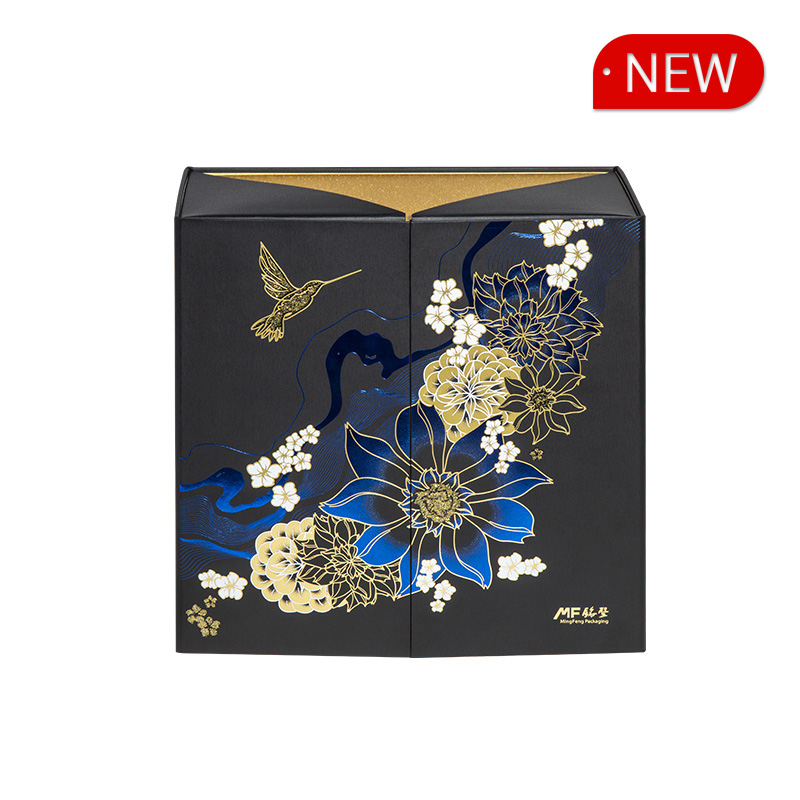
How do you choose eco-friendly paper packaging solutions for your business without sacrificing quality, budget, or your brand’s promise? This question is more pressing than ever. A recent survey found that 55.18% of consumers prefer environmentally friendly packaging. The global sustainable packaging market is growing at a CAGR of 6.0% to 7.44%, depending on the source. These numbers show that your customers expect sustainable options. Yet you must balance cost and performance. This guide provides a practical framework for evaluating and selecting the right sustainable paper packaging solutions. We cover key materials, design strategies, cost considerations, and how to avoid greenwashing. By the end, you will have a clear action plan to make informed choices.
Key Takeaways
- Choose paper packaging with FSC or PEFC certifications. These labels ensure responsible forest sourcing.
- Right-size your packaging to match product dimensions. This reduces waste and shipping costs.
- Balance recycled content with virgin fibers for durability. Protect products without excess material.
- Use clear labels like FSC and How2Recycle. This builds trust and avoids greenwashing.
- Partner with a certified supplier. Test materials under real conditions before scaling.
Why Choose Sustainable Paper Packaging Solutions
Meeting Consumer Demand and Enhancing Brand Image
Consumer expectations are shifting toward eco-friendly options. A 2023 Trivium Packaging report found that 82% of consumers across age demographics are willing to pay more for sustainable packaging. Among Gen-Z consumers, that number jumps to 90%. This willingness translates directly into brand loyalty. A quantitative study with 150 participants confirmed that sustainable packaging significantly enhances customer loyalty. The study also confirmed that sustainable packaging positively influences supply efficiency.
The study recommends businesses shift towards eco-friendly packaging materials (biodegradable, recyclable, or reusable) to enhance brand loyalty and meet customer expectations.
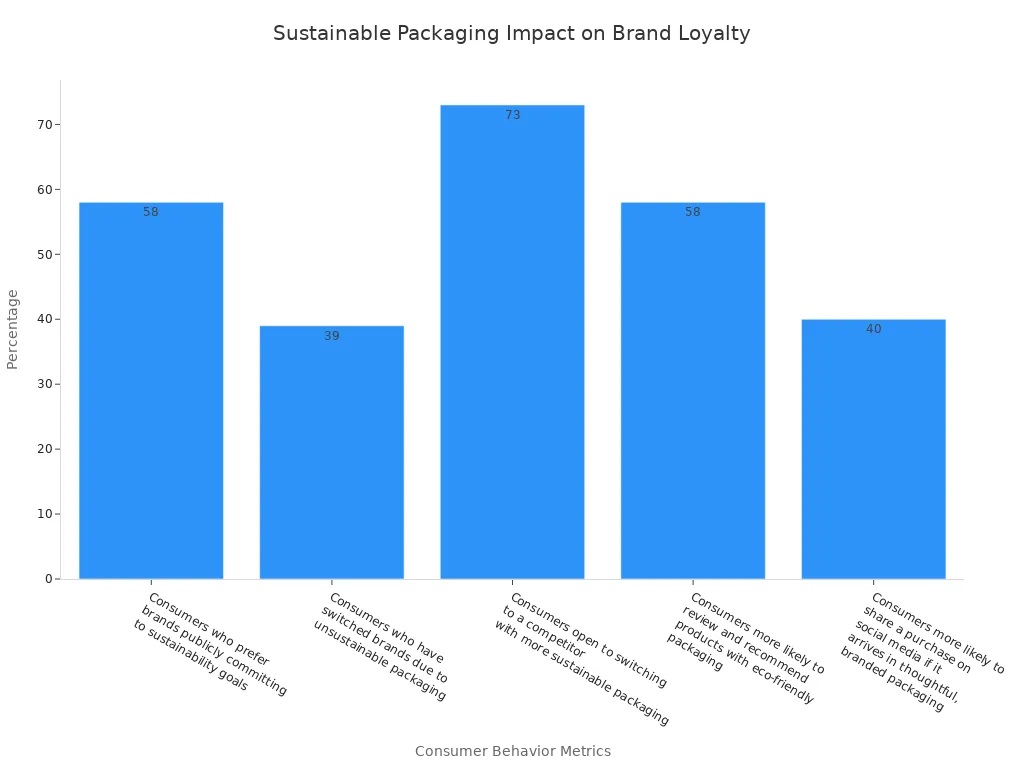
The data on brand switching tells a clear story. 39% of consumers have already switched brands due to unsustainable packaging. 73% of consumers are open to switching to a competitor with more sustainable packaging. 58% of consumers prefer brands that publicly commit to sustainability goals. 58% of consumers are more likely to review and recommend products with eco-friendly packaging. 40% of consumers are more likely to share a purchase on social media if it arrives in thoughtful, branded packaging.
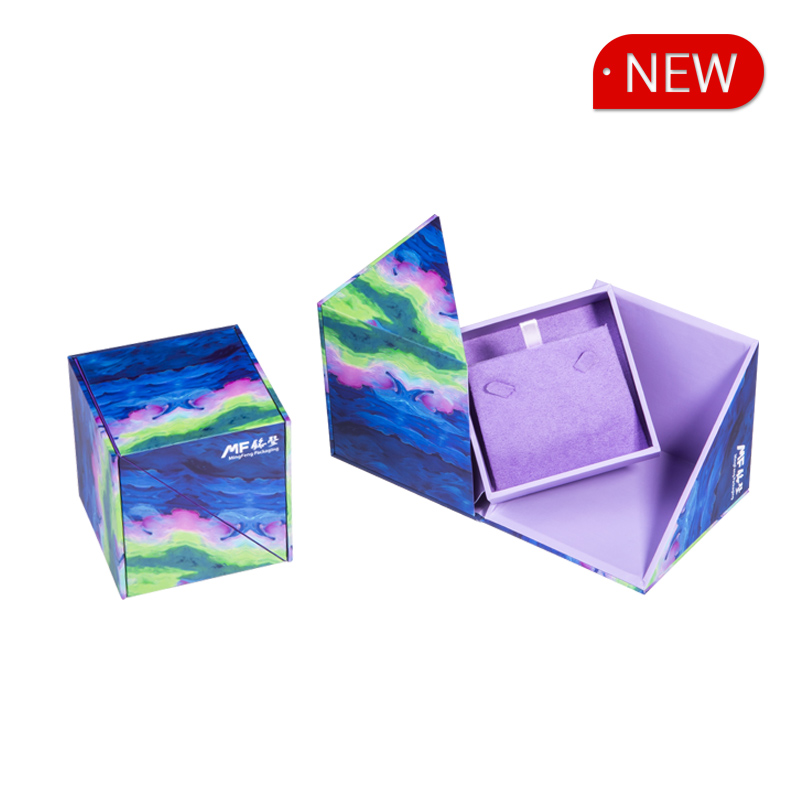
When you choose sustainable paper packaging solutions, you signal a forward-thinking, responsible brand. This alignment of values turns casual buyers into loyal customers. Sustainable packaging also helps your products stand out on the shelf. A McKinsey survey found that 55% of consumers consider sustainable packaging when making purchasing decisions.
Environmental Benefits and Practical Advantages
Paper offers genuine environmental benefits. In Europe, paper and cardboard achieve a recycling rate of 87%, the highest among all packaging materials. This compares to 42% for plastic. Paper/paperboard packaging has a low carbon footprint of 1.56 kg CO₂e per kg of material. In the U.S., the recycling rate for paper and paperboard was 68.2% in 2018, the highest among all materials in municipal solid waste.
Practical advantages follow naturally. Lighter packaging reduces shipping costs and carbon emissions simultaneously. Most carriers price shipments using dimensional weight and actual weight. Changing packaging size and weight lowers both freight costs and carbon emissions at the same time. Right-sized, lightweight packaging can reduce relative shipping emissions to 42 compared to 100 for oversized, heavy packaging. Right-sizing alone can cut shipping-related emissions by up to 30% per shipment.
Changing packaging size and weight lowers both freight costs and carbon emissions at the same time, since most carriers price shipments using dimensional weight and actual weight.
Paper is also versatile. Paper packaging solutions work for everything from food packaging to e-commerce boxes. The material adapts to different product shapes and sizes. You can use paper for primary packaging, secondary packaging, and shipping boxes alike.
Key Factors in Material Selection
Recycled Content and Key Certifications (FSC, PEFC)
You cannot judge a paper product by its appearance alone. The real test lies in its sourcing and composition. When you evaluate materials, start by examining recycled content. High recycled content reduces demand for virgin fibers and keeps waste out of landfills. However, you must balance this against durability. Recycled fibers are shorter and weaker than virgin fibers. A box that needs to survive a rough shipping journey may require a blend of both.
Certifications provide the verification you need. Two systems dominate the market: FSC and PEFC. Both confirm sustainable forestry, but they operate differently.
|
Aspect |
FSC |
PEFC |
|---|---|---|
|
Established |
1993, at the initiative of environmental organizations |
1999, in Europe, as an endorsement mechanism for national systems |
|
Basic Principle |
A system of national/regional standards based on ten global principles of sustainable forest management (e.g., indigenous rights, environmental impact, high conservation value forests) |
A mutual recognition mechanism for national systems, built on intergovernmental criteria (e.g., MCPFE, ITTO) covering forest resources, ecosystem health, biodiversity, and socioeconomic functions |
|
Core Guarantee |
Raw materials from controlled forest management |
Eco-sustainability via traceability of production process |
|
Certification Type |
Second-party (organization issues certificates) |
Third-party (uses certified institutions) |
|
Standard Approach |
Top-down, unified standards across all countries |
Bottom-up, national standards formulated by local forums |
|
Social Focus |
Indigenous peoples' rights and dialogue with local stakeholders |
Environmental and safety training for forestry workers |
|
Recognition |
Endorsed by major environment charities |
World's largest certification system, recognized in 51 countries |
PEFC holds particular relevance for smaller suppliers. The system was originally founded by small family forest owners to demonstrate excellence in sustainable forest management. It endorses national certification systems developed collaboratively and adapted to local conditions. Third-party assessment ensures consistency with international requirements. The PEFC label guarantees that forest-based material comes from certified forests managed sustainably. Chain of custody certification tracks the material through the supply chain and safeguards workers' rights. This framework gives small forest owners access to certification and gives you assurance of responsible sourcing.
Innovative Materials: Molded Pulp and Bioplastics
Beyond traditional cardboard, innovative materials expand your options. Molded pulp deserves serious attention. Manufacturers create it from recycled paper, water, and pressure. The result forms custom shapes that cradle products securely. This material shines for electronics, cosmetics, and food items.
The environmental advantages over plastic are substantial.
|
Environmental Benefit |
Quantified Reduction |
|---|---|
|
Energy consumption |
40-70% less than plastic |
|
Water usage |
50% less than plastic |
|
Greenhouse gas emissions |
60-80% lower than plastic |
|
Carbon footprint per package |
Up to 1.5 kg CO2e saved |
|
Recycling energy savings |
40% reduction in energy use |
|
Landfill waste reduction |
Up to 90% via composting |
Molded pulp also breaks down naturally without long-term pollution. It supports sustainable forestry by using fibers from responsibly managed forests. The production process consumes less energy and water compared to plastic manufacturing. This translates into a smaller carbon footprint for your business.
Bioplastics offer another avenue, though you should approach them with care. These materials derive from renewable sources like corn starch or sugarcane. Some bioplastics compost industrially, while others require specific conditions to break down. You must verify the disposal infrastructure in your target markets. A compostable package does little good if your customers lack access to industrial composting facilities.
Your choice ultimately depends on your product's needs. Heavy or fragile items demand sturdier materials. Lightweight, non-fragile products can use thinner, more sustainable options. Consider the entire lifecycle, from raw material extraction to end-of-life disposal. This holistic view ensures your paper packaging solutions align with both environmental goals and practical performance requirements.
Designing for Efficiency and Protection
Right-Sizing to Reduce Waste and Shipping Costs
Size and weight determine your packaging's environmental footprint more than any other factor. Most carriers calculate shipping costs using dimensional weight, not just physical weight. This means a larger box costs more to ship even when the product inside stays the same. Right-sizing your packaging delivers measurable results across your entire operation.
Consider what happens when you match packaging dimensions precisely to your product. One Packsize study found that companies achieved a 40% average reduction in packaging size. This same study showed a 26% decrease in corrugated material used. Your material costs drop proportionally. Your storage space requirements shrink. Your trucks carry more orders per trip.
The supply chain benefits compound further. Data from Paccurate sustainability research shows that right-sizing produces a 14% average reduction in trailer usage. The same data reveals a 12.5% reduction in corrugate use per order. That translates to eliminating roughly one square foot of material per carton. Multiply those savings across thousands of orders, and the numbers become substantial.
You can achieve these results through a systematic approach. Start by measuring your products accurately. Account for protective inserts and cushioning. Test different box dimensions to find the smallest configuration that still protects the contents. Review your packaging sizes quarterly as your product lineup evolves. Products change shape. Packaging should follow.
Balancing Durability with Sustainable Materials
Right-sizing creates efficiency, but protection remains non-negotiable. Your packaging must survive the journey from your warehouse to your customer's doorstep. This requires balancing durability against sustainability. The two goals do not conflict when you design thoughtfully.
Evaluate your product's specific needs first. Heavy items require stronger corrugated board. Fragile items need cushioning and structural support. Lightweight, sturdy products can use thinner materials. Consider the entire shipping journey: stacking in trucks, sorting in warehouses, and handling by delivery personnel. Each step stresses your packaging differently.
Your material choice affects performance. Recycled fibers offer environmental benefits but provide less strength than virgin fibers. A blend often delivers the best balance. The right mix depends on your product's weight and fragility. Test your packaging under real shipping conditions before committing to a design.
Transportation efficiency also influences material selection. Lighter packaging reduces fuel consumption and carbon emissions. Every gram you remove from your packaging reduces your shipping footprint. But you cannot sacrifice protection for weight savings. A damaged product creates more waste than any packaging material saves.
Look and feel matter too. Your packaging represents your brand. Customers notice quality materials and thoughtful design. Sustainable materials can look premium when you choose the right finish. The tactile experience of opening a well-designed package enhances customer satisfaction.
Simplify your design to maximize sustainability. Use minimal printing with water-based inks. These inks contain fewer volatile organic compounds than solvent-based alternatives. They break down more easily during recycling. Reduce decorative elements that add weight without adding protection. Focus your design budget on structural integrity rather than elaborate graphics.
Your paper packaging solutions should reflect a clear hierarchy: protect the product, minimize material, optimize shipping, and communicate your brand. When you balance these priorities, you create packaging that performs well and aligns with your sustainability goals. The design phase offers your best opportunity to reduce environmental impact without compromising quality.
Managing Costs and Supplier Partnerships
Analyzing the True Cost of Sustainable Packaging
The sticker price of sustainable packaging tells only part of the story. You must examine the full cost picture, including shipping, storage, and regulatory factors. Bulk purchasing changes the economics dramatically. When you order at volume, the unit cost premium narrows considerably.
Consider a high-volume restaurant serving 200 covers daily. That operation uses roughly 6,000 packaging units monthly. The 30% unit cost premium translates to €60-€120 extra each month. However, plastic tax savings of €30-€90 and annual EPR savings of €200-€500 offset much of that premium.
|
Scenario |
Key Data Points |
Impact on Unit Cost |
|---|---|---|
|
High-Volume QSR (200 covers/day) |
6,000 units/month; 30% premium; tax €0.005-€0.015/item; EPR €200-€500/year |
Premium of €60-€120 offset by €30-€90 tax savings and €200-€500 EPR savings |
|
Café (300 cups/day) |
9,000 cups & lids/month; lid €0.015/unit; tax €0.003/cup |
Removing 9,000 lids saves €135/month plus €27 tax, totaling €162/month |
|
Horeca Distributor (50+ accounts) |
One corporate account requiring certified packaging |
Revenue from one account exceeds total cost premium across portfolio |
A café using 300 takeaway cups daily faces a similar calculation. Eliminating 9,000 plastic lids saves €135 monthly plus €27 in tax savings. Those savings partially or fully offset the higher unit cost of lid-free cups. Storage costs matter too. Right-sized packaging occupies less warehouse space and reduces dimensional weight charges from carriers.
Partnering with a Reliable Supplier for Custom Solutions
Your supplier choice determines the success of your paper packaging solutions. Vet potential partners thoroughly before committing. Look for third-party certifications that verify their claims. FSC certification confirms ethically sourced materials. BPI certification verifies compostability. GRS certification tracks recycled content percentages.
Ask suppliers about sourcing transparency. Request full disclosure of raw material origins. Evaluate production ethics, including labor practices and emissions control. A supplier with strong ESG alignment reduces your own sustainability risks.
Consider these factors when vetting suppliers:
-
Relevant certifications like ISO 14001, ASTM D6400, EN 13432, or BPI
-
Experience with similar brands and scaling orders
-
Sourcing transparency for raw materials
-
Production ethics and waste reduction policies
-
Customization options for branding
-
Lead times and shipping reliability
Test your packaging under real-world conditions before full commitment. Conduct pilot orders to assess durability during transit and moisture exposure. Verify that materials compost in your target regions to avoid landfill waste.
A partner like MingFeng Packaging offers custom, right-sized solutions that align with both budget and eco-goals. Their experience helps you navigate the complexities of sustainable paper packaging solutions while maintaining quality and controlling costs.
Communicating Sustainability Without Greenwashing
Using Clear and Honest Labeling on Packaging
Your packaging tells a story. Make sure that story is true. Consumers have grown skeptical of vague environmental claims. You build trust through specific, verifiable labels that third parties certify.
|
Eco-Label |
Focus/Meaning |
Consumer Trust Relevance |
|---|---|---|
|
FSC® |
Ensures paper/cardboard comes from responsibly managed forests |
Globally recognized for sustainable forestry |
|
Mobius Loop |
Indicates recyclability, often with recycled content percentage |
Helps consumers recycle responsibly |
|
Compostable (BPI, OK compost HOME) |
Breaks down into natural elements; BPI for industrial, OK compost HOME for home |
Gives clear end-of-life disposal options |
|
Green Seal® |
Certifies products meet strict environmental standards across lifecycle |
Provides verified third-party endorsement |
|
Cradle to Cradle Certified® |
Evaluates circularity, safe materials, water/energy use, social fairness |
Supports closed-loop lifecycle appeal |
These labels condense complex sustainability data into recognizable symbols. Consumers identify eco-friendly options at a glance. The FSC label alone counters skepticism about greenwashing because it assures genuine environmental criteria. When you choose certified sustainable paper packaging solutions, you give customers verifiable proof rather than empty promises.
Educating Customers on Recycling and Disposal
Many people are confused about what items can be recycled, where they can be recycled and how. This often leads to recyclables going in the trash or trash going in the recycling bin.
Clear labeling directly solves this confusion. According to GreenBlue, the How2Recycle label influenced or encouraged a purchase decision for 51% of consumers. Transparency builds trust, which improves participation and reduces contamination. California's SB 343 now prohibits misleading recycling symbols and defines recyclability, pushing brands toward honest communication.
QR codes offer a dynamic layer of education. Consumer Brands and The Recycling Partnership now provide localized recycling data through QR codes on packaging. Recycling rules vary by municipality, so location-based guidance eliminates guesswork. A simple scan reveals accurate instructions for your customer's specific area.
QR codes also allow you to update instructions without reprinting packaging. You can offer multilingual content without additional labels. You can share material composition details, producer responsibility information, and reuse or refill options. This turns sustainability from a vague concept into something concrete. When customers feel informed, they feel respected. When they feel respected, they make better choices.
Share your sustainability journey honestly, including challenges. Overstating claims damages credibility. Your sustainable paper packaging solutions should speak through verified labels, clear disposal instructions, and transparent communication. This approach builds lasting customer loyalty while genuinely reducing environmental impact.
Choosing sustainable paper packaging solutions is a strategic decision. It benefits the planet, your customers, and your bottom line. The market reflects this shift. Projections show sustainable packaging reaching USD 448.5 billion by 2030, growing at 7.6% annually.
You now have a clear framework. Assess materials with FSC or PEFC certifications. Optimize design through right-sizing and lightweighting. Manage costs holistically, considering shipping and storage. Communicate transparently to avoid greenwashing.
Take the first step, no matter how small. View this as an ongoing journey. Partnering with an experienced supplier like MingFeng Packaging simplifies the transition. Your choice shapes the future of packaging. Make it count.
FAQ
How much more does sustainable paper packaging cost compared to plastic?
Sustainable paper packaging solutions typically cost 10-30% more per unit than conventional plastic alternatives. However, volume discounts narrow this gap substantially. You offset the premium through reduced shipping costs, plastic tax savings, and lower EPR fees. Many businesses find the net cost difference minimal after accounting for these factors.
How can I verify a supplier's sustainability claims?
Request third-party certifications like FSC, PEFC, or BPI. These labels confirm independent verification rather than self-reported claims. Ask for chain-of-custody documentation that traces materials from forest to finished product. Visit supplier facilities when possible. Review their waste reduction policies and emissions data before committing to a partnership.
What is the difference between recyclable and compostable paper packaging?
Recyclable packaging returns to the paper stream and becomes new products. Compostable packaging breaks down into organic matter under specific conditions. Recyclable materials require clean, dry collection systems. Compostable items need industrial facilities that maintain proper temperature and moisture. Check your local infrastructure to determine which option works best for your customers.
How do I transition from plastic to paper packaging without disrupting operations?
Start with one product line rather than overhauling everything at once. Test different materials under real shipping conditions. Measure damage rates, customer feedback, and cost changes. Work with your supplier to right-size packaging for each product. Scale gradually as you confirm performance and gather data on what works best for your specific needs.

 +1 626 369 5099


 IPv6 network supported