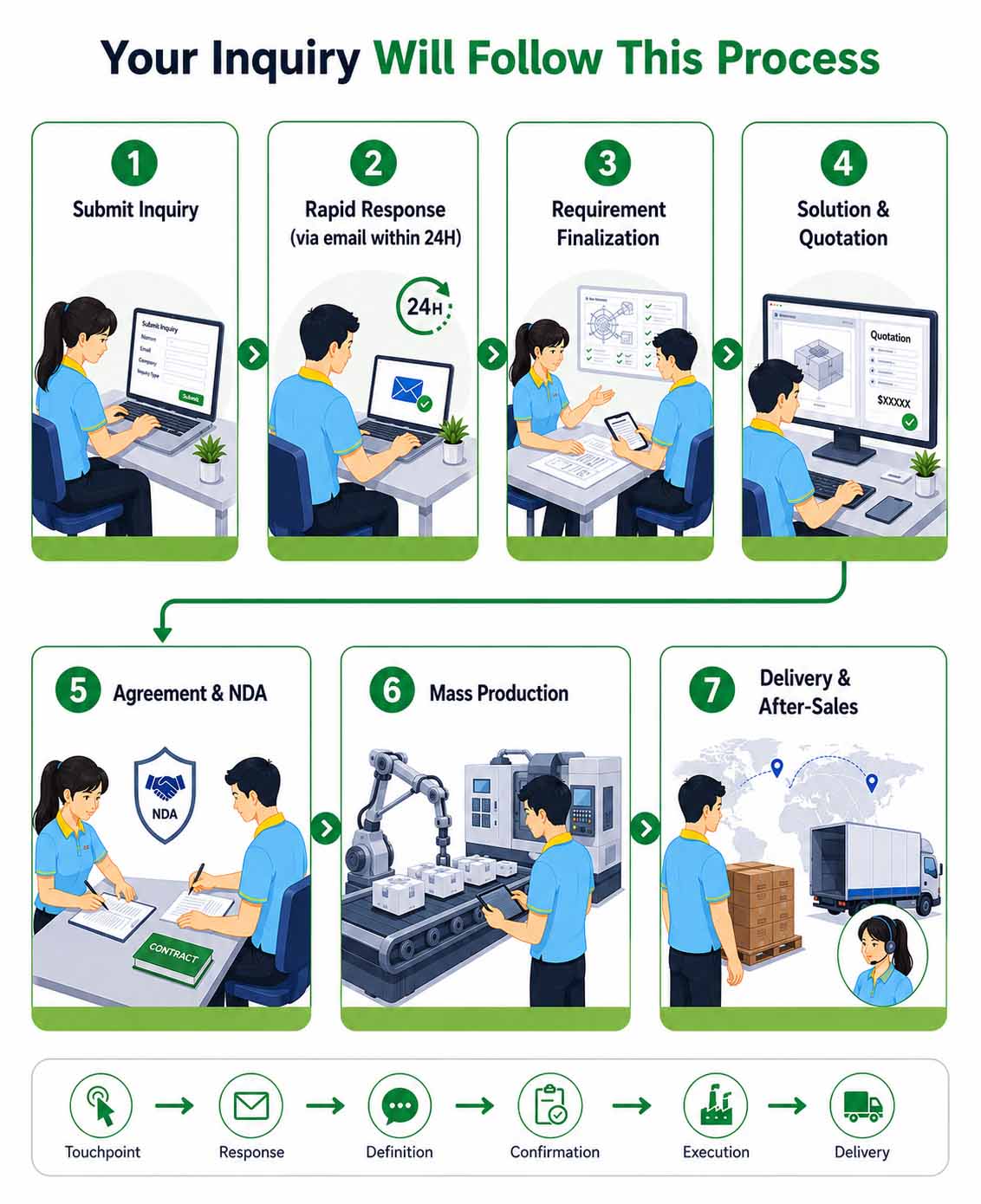
leave a message
If you are interested in our products and want to know more details,please leave a message here,we will reply you as soon as we can.
Crystal and glass products are often valued for their transparency, craftsmanship, and delicate visual details. However, these same qualities make them particularly vulnerable during storage, handling, and transportation. A beautifully designed crystal vase, glass ornament, decorative glassware set, or collectible display piece can easily suffer chips, scratches, cracks, or complete breakage if its packaging does not provide sufficient internal support.
For premium brands, packaging needs to do more than look attractive. It must keep fragile products securely positioned while maintaining the presentation quality customers expect. This is where high-density EVA foam inserts become an important packaging consideration. With customized cavities, controlled cushioning, and a refined interior finish, EVA foam can help create a more reliable protective structure for delicate crystal and glass products.
At MingFeng Packaging, packaging development combines structural design, material selection, and customized production. By considering the relationship between the product, internal insert, and outer box, brands can develop packaging solutions that balance protection, presentation, and manufacturing requirements.
Crystal and glass products have different shapes, thicknesses, and structural characteristics, but they share one important weakness: they can be damaged by concentrated impact or repeated movement. Even when the outer packaging appears strong, insufficient internal support can allow the product to collide with the box or other items.
Several packaging challenges are particularly common:
For these reasons, protective packaging should be designed around the actual product rather than relying entirely on standard cushioning materials. A properly developed insert can help control movement, distribute contact forces, and provide a more consistent packaging experience.
EVA (ethylene-vinyl acetate) foam is a closed-cell cushioning material commonly used in protective packaging and customized product inserts. Its combination of resilience, flexibility, and structural support makes it a useful option for products that need a shaped internal holding structure.
High-density EVA foam is particularly worth considering when packaging heavier glass products or items that require more stable positioning. However, density alone does not determine protection performance. Foam thickness, hardness, compression behavior, cavity geometry, and the weight of the packaged product must also be evaluated.
Consistent cushioning and support: EVA foam can help absorb and distribute some impact energy when properly selected and designed. This reduces direct contact between the product and the rigid packaging structure.
Customized cavity design: EVA foam can be cut into product-specific shapes, allowing glass bottles, crystal ornaments, and other fragile objects to sit in defined positions rather than moving freely inside the box.
Structural stability: A suitable foam grade can maintain its shape under normal handling conditions and provide consistent support around the product. This is particularly useful for packaging with multiple compartments.
Refined appearance: EVA inserts can be combined with satin, velvet, or other decorative materials to create an attractive interior. This makes them suitable for premium gift boxes and luxury product presentation.
For brands developing high-end packaging, these properties make EVA a practical material to evaluate alongside the outer box structure and product-specific protection requirements.
The effectiveness of a protective insert depends on how well it controls product movement and manages contact during handling. For fragile crystal and glass products, the insert should provide support at appropriate locations without placing excessive pressure on delicate areas.
Reducing unnecessary movement: A precisely shaped cavity helps keep the product in its intended position. This is important when packages are carried, stacked, or transported over long distances.
Supporting vulnerable sections: Glass stems, narrow necks, handles, decorative edges, and projecting details may need additional structural support. A custom EVA insert can be designed to accommodate these features rather than allowing them to bear the product's weight.
Separating multiple products: When a packaging box contains several glasses or crystal pieces, individual cavities help prevent direct contact between neighboring items. This is especially important for gift sets and collectible collections.
Reducing contact with hard surfaces: A suitable cushioning layer creates separation between fragile products and the rigid walls or base of the packaging. This helps reduce the risk of damage caused by direct contact during handling.
It is important to understand that foam inserts cannot guarantee breakage prevention under every shipping condition. The complete packaging system, including the outer box, insert thickness, product positioning, and transportation environment, must work together to provide reliable protection.
Standard foam sheets and generic padding materials may be suitable for simple products, but they are not always ideal for fragile items with distinctive shapes. A crystal sculpture and a set of drinking glasses, for example, have very different support requirements.
Custom-cut EVA inserts are developed according to the dimensions and geometry of the actual product. Instead of filling empty space with additional padding, the insert creates a defined holding area that helps control the product's position.
For a crystal vase, the insert may need to support the base and provide clearance around its wider body. For stemmed glassware, individual slots can help separate the bowls and stems. For decorative glass ornaments, multiple support points may be required to accommodate irregular contours.
Compared with generic foam padding, customized inserts offer several practical advantages:
The design process should consider not only the product's external dimensions but also its weight distribution, fragile points, removal direction, and the amount of clearance required for safe handling.
Brands looking for a coordinated packaging structure can explore MingFeng's custom product packaging solutions, which cover different materials, product applications, and customized packaging structures.
For premium crystal and glass products, packaging is also part of the customer experience. A protective insert should not make the product look hidden or difficult to access. Instead, it should frame the product and create a clean presentation when the box is opened.
This is where material combinations become valuable. EVA foam can provide the internal structure, while velvet, satin, or other decorative finishes can improve the appearance and tactile experience of the packaging.
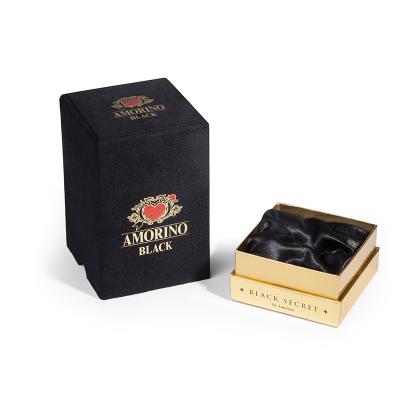
For example, MingFeng's Luxury Black Velvet Perfume Gift Box combines a customized black EVA inner structure with satin lining. The product demonstrates how an internal holding structure can be integrated with a premium exterior to create both functional support and an elegant presentation.
Although this particular packaging is designed for perfume, the same structural design considerations can be evaluated when developing packaging for fragile decorative glass products, depending on their dimensions and protection requirements.
For brands that prioritize visual display, the insert color can also be selected to complement the product. Black interiors can create strong contrast with transparent glass, while neutral or light-colored linings can create a softer presentation. The final choice should consider product visibility, surface sensitivity, and brand identity.
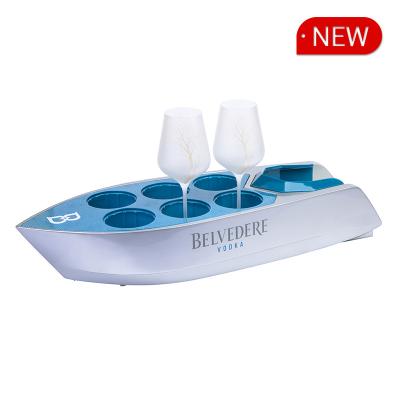
MingFeng also develops customized display structures for glass products. Its Pine Wood Boat-Shaped Display for Alcoholic Beverages features individually designed glass slots, customized inserts, and a velvet-lined base. It is a useful example of how product positioning and display presentation can be integrated into one packaging solution.
Choosing the right EVA foam insert requires more than specifying a high-density material. Different glass products have different weights, geometries, and transportation requirements. A material that works well for a small decorative ornament may not provide sufficient support for a large crystal vase.
Foam density and hardness: Density and hardness influence the insert's structural behavior. Brands should evaluate these properties according to the product's weight and required cushioning performance rather than assuming that the highest density is always the best choice.
Foam thickness: The thickness of the insert affects how much cushioning space is available. It should be sufficient to provide support without making the packaging unnecessarily bulky.
Cavity dimensions: The cavity should accommodate the product securely while allowing customers to remove it without applying excessive force. An overly tight fit can create unwanted pressure on fragile glass surfaces.
Contact surface: Polished, coated, or decorative glass surfaces may require a soft fabric lining or an additional protective layer to minimize abrasion and direct friction.
Outer box compatibility: The insert must fit securely inside the box and work with its walls, lid, base, and closure structure. The complete packaging assembly should be evaluated rather than testing the foam separately.
For brands developing premium gift packaging, MingFeng's creative design services and structural development capabilities can help coordinate material selection, product positioning, and overall packaging appearance.
Even a carefully designed EVA insert should be evaluated through physical sampling before mass production. Product drawings and digital models can help establish the initial dimensions, but they cannot fully replace practical testing of the complete packaging structure.
A prototype allows brands to check several important details:
For products intended for long-distance shipping, additional packaging tests should be considered. These may include vibration, drop, compression, and transportation simulation tests appropriate to the product and distribution environment.
MingFeng Packaging provides packaging prototyping and customized production support, helping brands review structural designs and material combinations before moving into larger production runs. This process can help identify potential fit and presentation issues at an earlier stage.
Developing packaging for fragile crystal and glass products requires coordination between material selection, structural engineering, production, and visual design. Choosing an experienced packaging partner can make this process more manageable, especially when the packaging needs to meet both protective and premium presentation requirements.
MingFeng Packaging focuses on high-end customized packaging solutions and multi-material applications. Its capabilities include paper, wood, leather, biomass-based materials, bamboo, and composite materials, supported by structural design, color management, prototyping, and customized production.
For fragile product packaging projects, this integrated approach makes it possible to consider the complete packaging structure rather than selecting an insert material in isolation. The outer box, internal support, surface finishing, and product presentation can be developed as connected parts of the same solution.
Whether a brand is developing a crystal gift box, a premium glassware set, or a customized decorative display package, the packaging structure should reflect the actual product requirements. By providing product dimensions, reference images, weight information, and transportation details, brands can help the packaging team develop a more suitable solution.
To discuss a customized packaging project, visit MingFeng Packaging and explore its packaging design and manufacturing capabilities.
Why are high-density EVA foam inserts used for fragile glass packaging?
High-density EVA foam inserts provide structural support and cushioning for fragile glass products. When properly selected and customized, they help reduce unnecessary movement, separate individual items, and limit direct contact with hard packaging surfaces.
Is EVA foam suitable for packaging crystal ornaments?
Yes. EVA foam can be customized to accommodate the shapes of crystal ornaments, decorative glass objects, and collectible pieces. The insert should be designed around the product's dimensions, weight, fragile areas, and surface characteristics.
Is higher-density EVA foam always better for glass protection?
No. Higher density does not automatically mean better cushioning. Foam hardness, thickness, compression behavior, cavity design, and product weight must all be considered. The most suitable EVA specification depends on the actual packaging application.
Can EVA foam inserts be customized for irregularly shaped glass products?
Yes. Custom-cut EVA inserts can be developed for products with curved surfaces, narrow stems, handles, protruding details, and unusual geometries. Product samples or accurate technical drawings help improve cavity design accuracy.
Can EVA foam be combined with velvet or satin?
Yes. EVA foam can be combined with velvet, satin, or other decorative linings to create a more refined packaging interior. This combination is particularly useful for luxury gift boxes and premium product presentation, provided the contact materials are compatible with the product surface.
How do you prevent glass products from scratching inside a foam insert?
The insert should have appropriate cavity dimensions, smooth contact areas, and suitable protective surface materials. Cleanliness during production and packing is also important because dust or hard particles trapped between the foam and glass can cause scratches.
Should EVA foam inserts be tested before mass production?
Yes. Physical prototypes help verify product fit, cavity dimensions, support points, removal convenience, and compatibility with the outer box. For products shipped over long distances, the complete packaging should also undergo appropriate transportation and impact testing.
Can MingFeng Packaging develop customized packaging for fragile glass products?
MingFeng Packaging provides customized packaging design, material selection, structural development, prototyping, and production services. Brands can share product specifications and packaging requirements to discuss suitable protective structures and material combinations.
For fragile crystal and glass products, attractive packaging is only part of the solution. The internal structure plays an equally important role in controlling product movement, reducing unnecessary contact, and supporting delicate components during handling and transportation.
High-density EVA foam inserts offer a flexible option for brands that need customized cavities, stable positioning, and a premium packaging interior. However, the best results come from selecting the appropriate foam specifications, developing accurate product-specific structures, and testing the complete package before mass production.
At MingFeng Packaging, material selection, structural design, and customized manufacturing work together to create packaging solutions that consider both product protection and brand presentation. A well-designed package does not simply contain a fragile product. It helps ensure that the product is presented with the care and attention it deserves.

Mingfeng Packaging(USA)
> 4185 Temple City Blvd,
Unit D,EI Monte,CA91731,USA


 +1 626 369 5099

 IPv6 network supported
